



Sweet Bonanza Strategy Guide for Australian Players: Tips That Actually Work
Provider:
Pragmatic Play
Game Category:
Slot
Risk Level:
Wild
Payout Percentage:
96.48%
Smallest Bet:
0.2
Maximum Stake:
125
Autoplay:
Yes
Launch Date:
27.06.2019
Search results for Sweet Bonanza strategy are dominated by promises of "secret systems" and "guaranteed wins". This guide takes a different approach. Sweet Bonanza is a high-volatility cluster-pays pokie with a 3.49% house edge, and no strategy alters that fundamental maths. What disciplined players can do is manage their bankroll, calibrate bet size to risk tolerance, and make rational decisions about Ante Bet and Bonus Buy. The result is not a winning system — it is a framework for getting the most entertainment per dollar within the boundaries of probability.
Foundation: Understanding RTP, Volatility, and House Edge

Three terms anchor every meaningful slot strategy discussion. Getting them straight is the first step.
Return to Player (RTP) is the long-term average return across millions of spins. Sweet Bonanza's standard 96.51% RTP means that, over the long run, the game returns 96.51 cents per dollar wagered. This figure is not a session prediction — it is a statistical mean that emerges only across very large sample sizes.
Volatility describes how outcomes are distributed around that average. High volatility means longer dry spells punctuated by occasional large wins. Sweet Bonanza is officially classified as high volatility.
House edge is the complement of RTP — 100% minus the RTP percentage. For Sweet Bonanza in default configuration, that is 3.49%. Every dollar wagered contributes, on average, 3.49 cents to the operator over time.
The expected loss for any session can be estimated with a simple formula:
Expected Loss = Total Wagered × (1 - RTP)
Wagering A$1,000 in total at default RTP produces an expected loss of A$34.90. Variance is what causes individual sessions to fall above or below this mean.
The size of variance around the mean is what makes high-volatility slots feel different from low-volatility ones. In a session of 1,000 spins at $1, the statistical 95% confidence interval for actual results is approximately -A$300 to +A$230 around the A$34.90 expected loss — meaning that any session result inside that range is mathematically normal. Players who interpret a -A$200 session as "the slot is rigged" or a +A$150 session as "the slot is loose" are misreading natural variance as signal. Understanding this in advance prevents both kinds of mistake: over-confidence after wins and despair after losses.
Bankroll Management: The One Strategy That Actually Matters
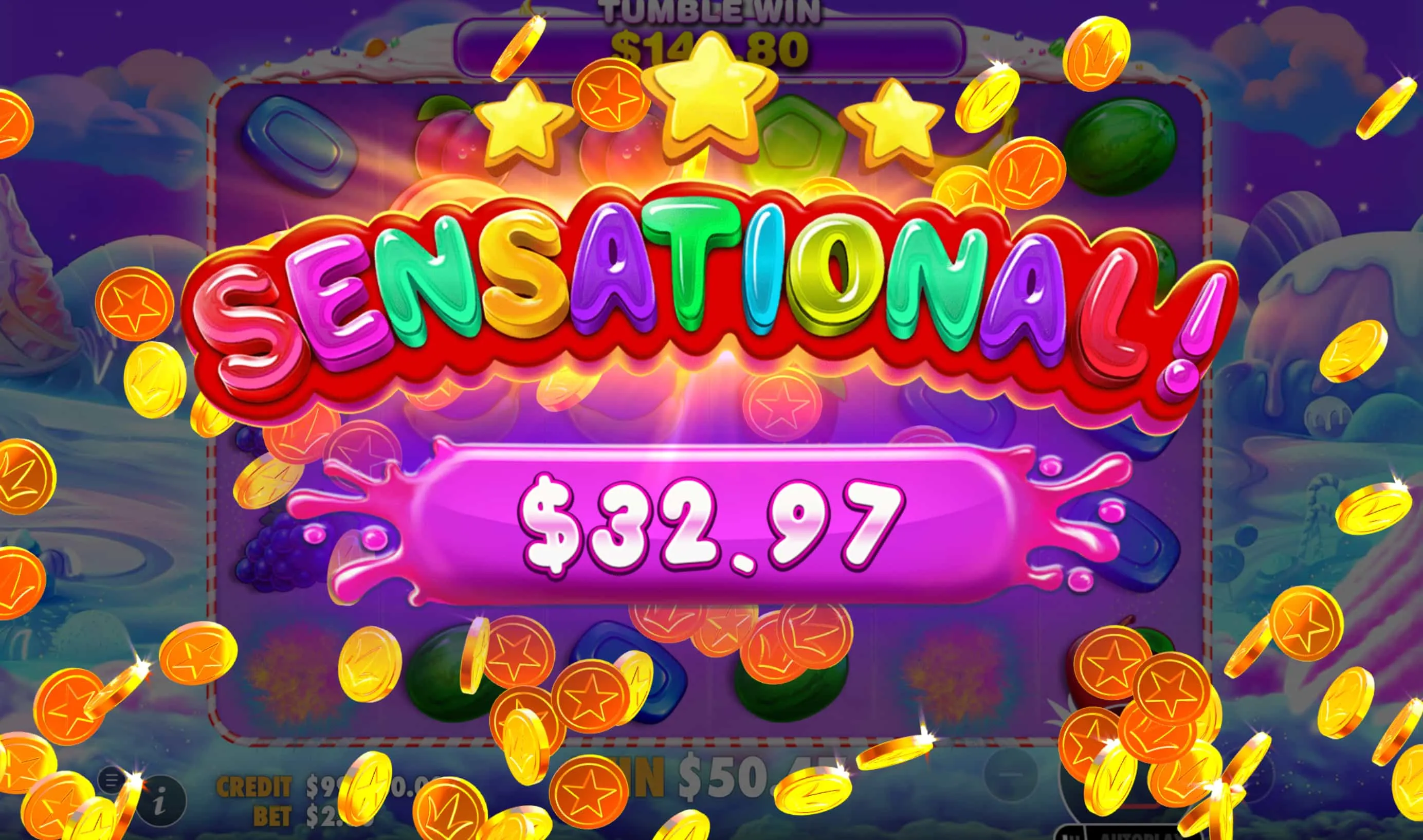
Bankroll management does not change the odds. What it does is ensure that natural variance does not deplete the player's funds before the long-run mean has any chance to express itself. For high-volatility slots like Sweet Bonanza, the consensus benchmarks are:
- Session bankroll: at least 200 times the base bet.
- Stop-loss: 50% of session bankroll, applied as a hard cut-off.
- Take-profit: 200% of session bankroll (i.e., session double).
- Time segmentation: daily, weekly, and monthly budgets defined separately.
A player with a A$100 monthly entertainment allocation should treat each session as approximately A$25, supporting bet sizes between A$0.20 and A$0.40 — exactly the minimum end of Sweet Bonanza's range. This produces 60–125 spins per session before the stop-loss activates, enough sample size for variance to express itself without ruining the bankroll.
The benchmark of 200 times the base bet may sound conservative, but it reflects the empirical behaviour of high-volatility slots. Drawdown analysis on Sweet Bonanza specifically shows that 50% bankroll drops are routine within the first 100 spins of any session, even though the long-run RTP eventually balances these dry stretches with bonus-round payouts. A 200× cushion is what allows the player to remain in the session long enough for the balancing to occur. Smaller cushions — 50× or 100× — produce premature ruin in roughly half of all simulated sessions, regardless of bet size, regardless of operator, regardless of strategy.
Calibrating Bet Size to Bankroll

Bet size is the operational lever for bankroll management. The four profiles below illustrate how different bankroll sizes map to appropriate bet ranges.
| Profile | Bet Range | Session Bankroll | Best Suited To |
| Conservative | A$0.20 – A$0.40 | A$40 – A$80 | Players testing the slot, small monthly budgets |
| Moderate | A$0.50 – A$2.00 | A$100 – A$400 | Regular players with weekly entertainment allocation |
| Aggressive | A$2.00 – A$10.00 | A$400 – A$2,000 | Players with substantial discretionary income |
| High Roller | A$10.00 – A$125.00 | A$2,000 – A$25,000 | VIP segment with bankrolls structured for high-volatility play |
The Ante Bet Decision
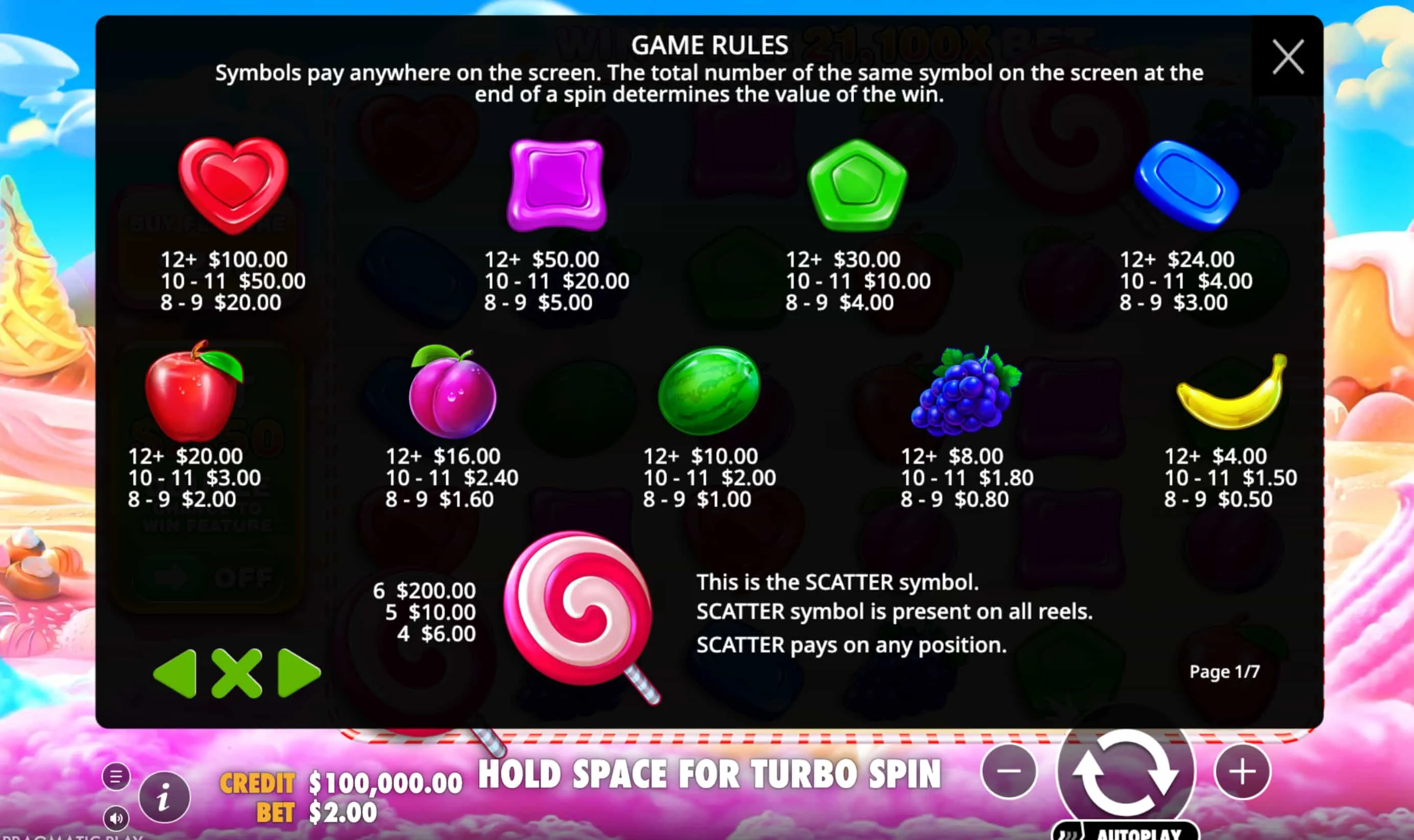
Ante Bet increases each spin's cost by 25% and roughly doubles the chance of triggering free spins. The crucial point — frequently misrepresented in affiliate content — is that the RTP does not change. Activating Ante Bet does not improve the expected return; it redistributes variance.
What changes with Ante Bet active:
- Free spins triggers occur more often.
- Base game wins occur less often and at smaller average values.
- The cost per spin is 25% higher, which compresses the player's spin count for any given bankroll.
Ante Bet is the right choice when the player specifically values free-spins entry frequency over base-game hit rate, when bankroll absorbs the 25% surcharge, and when the player accepts longer base-game dry spells. It is the wrong choice on tight bankrolls or when the player prefers steadier base-game flow.
Bonus Buy ROI: The Numbers
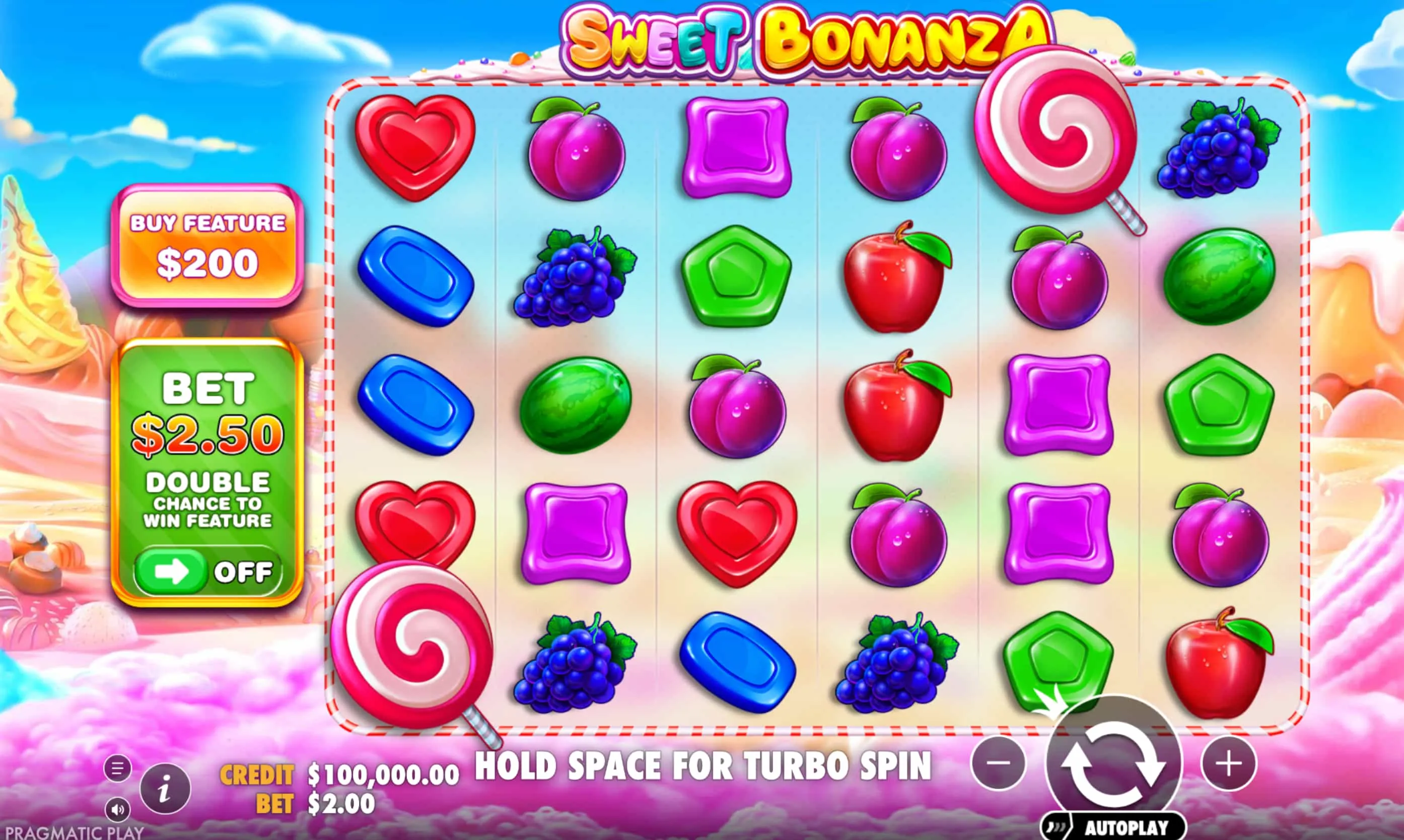
Bonus Buy purchases free spins entry directly for 100× the current stake. The certified RTP for this mode is 96.48%. The maths is straightforward:
Expected return = 100× × 96.48% = 96.48× the stake
This means each Bonus Buy carries an expected loss of 3.52% of the purchase price. The simulation table below shows the long-term picture.
| Buys | Total Cost | Expected Return | Expected Net | Realistic Variance Range |
| 10 | A$1,000 | A$964.80 | -A$35.20 | -A$700 to +A$2,500 |
| 50 | A$5,000 | A$4,824 | -A$176 | -A$2,500 to +A$8,000 |
| 100 | A$10,000 | A$9,648 | -A$352 | -A$4,000 to +A$15,000 |
Three takeaways. First, Bonus Buy is mathematically equivalent to extended base-game play at a slightly worse RTP — it is not a profit shortcut. Second, the variance is extreme; most individual purchases return less than the buy cost. Third, Bonus Buy is banned in the UK and Netherlands but remains active at offshore operators serving Australian players.
For players who specifically value the bonus mechanics and have the bankroll to absorb a series of losing buys, Bonus Buy can be a rational choice — provided the decision is framed accurately. The framing that works mathematically: each buy costs the player approximately 3.52% of the buy amount in expectation, in exchange for guaranteed access to the free-spins round. The framing that fails mathematically: buying the bonus to recover prior losses, expecting the buy to "compensate" for a dry session. Each Bonus Buy is statistically independent of every prior result, which means the casino's edge applies fresh on every purchase regardless of what happened before.
Reading the Tumble Feature
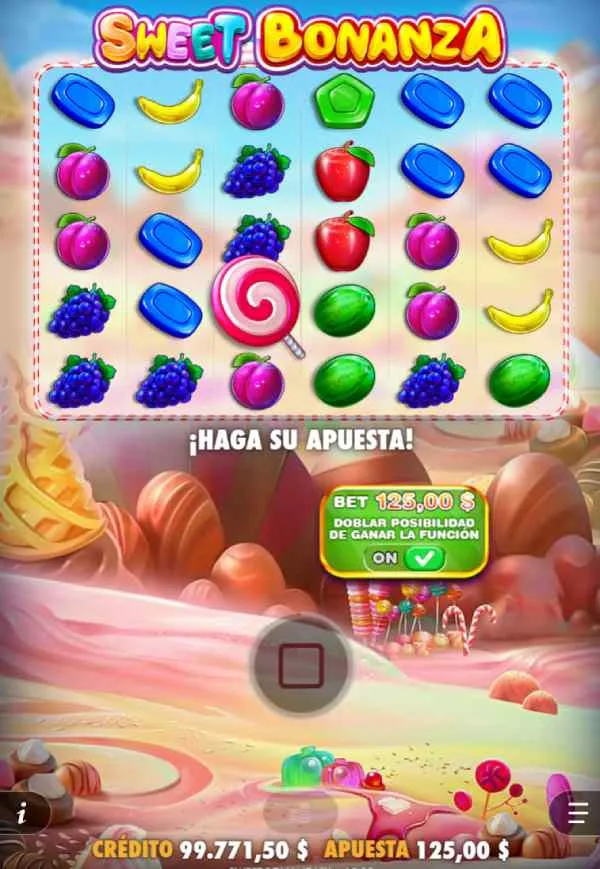
The tumble feature is RNG-driven, with each cascade independent of the one before it. There is no momentum, no pattern, no "hot streak" in any predictive sense. Apparent patterns are the product of human pattern-recognition cognition applied to genuinely random sequences — the gambler's fallacy in action.
This has one practical consequence: bet size should not be adjusted in response to tumble behaviour. The probability of any future cascade is unaffected by the previous one.
Free Spins: Three Rules After a Big Win
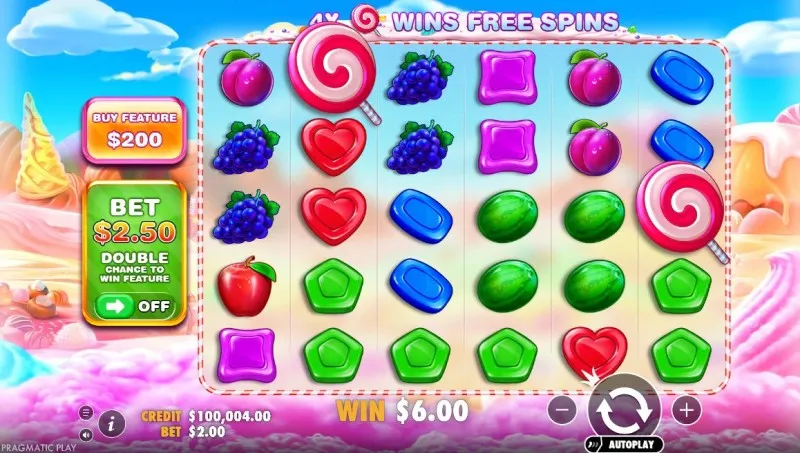
One of the most common errors among Sweet Bonanza players is increasing bet size after a substantial free-spins payout. The reasoning — "I'm on a hot run" — has no mathematical foundation. The RNG has no memory.
Three rules apply:
- Bet size is set before the session and held constant. Mid-session adjustments break the bankroll plan.
- After a substantial win, partial cash-out is rational. Reinvesting all winnings exposes them to the same house edge as the original deposit.
- After a dry spell, bet size should not be increased. Loss-chasing is the strongest behavioural marker for problem gambling progression.
Five Mistakes That Cost Players Money
- Buying the bonus to recover losses. Each Bonus Buy is an independent expected-loss event. Chasing prior losses with feature purchases compounds them rather than recovers them.
- Ignoring the configured RTP version. The 94.51% reduced version carries 57% more house edge than the default. A 30-second paytable check eliminates this risk.
- Playing without a stop-loss. High volatility regularly produces 50% drawdowns. A session without a hard stop-loss eventually consumes the full bankroll.
- Skipping time limits. Cognitive fatigue measurably degrades decision quality after 60–90 minutes.
- Playing while impaired. Alcohol, fatigue, and emotional distress all reduce executive function. None improve probabilistic decision-making.
Pre-Session Checklist
A disciplined session begins before the first spin. The following checklist operationalises everything above.
- Session bankroll defined in absolute dollar terms.
- Hard stop-loss set at 50% of session bankroll.
- Hard take-profit set at 200% of session bankroll.
- Time limit set at 30–60 minutes.
- Operator-side deposit limits configured in account settings.
- Reality check pop-ups enabled at 30-minute intervals.
- Bet size committed before launching the game.
- RTP version verified in the in-game paytable.
When Sweet Bonanza Should Not Be Played
The following conditions are documented predictors of harmful gambling outcomes — not soft warnings. Sessions should be deferred until each is resolved.
- Loss-chasing: playing specifically to recover prior losses.
- Emotional distress: stress, anger, sadness, or anxiety degrade executive function.
- Substance influence: alcohol and drugs measurably impair probabilistic reasoning.
- Daily limit breached: returning after stop-loss converts a planned session into an unbounded one.
- Borrowed funds: gambling with credit, loans, or money allocated to obligations is a financial risk multiplier.
Australian support is free and confidential: Gambling Help Online 1800 858 858 (24/7), Lifeline 13 11 14, and the BetStop national self-exclusion register at betstop.gov.au.
Frequently Asked Questions
Is there a guaranteed winning strategy for Sweet Bonanza?
No. Sweet Bonanza uses a certified RNG with a 3.49% house edge in default configuration. No betting pattern, system, or feature-purchase tactic alters this maths. Strategies that improve outcomes operate on bankroll discipline, not on the underlying odds.
Should Ante Bet always be activated?
No. Ante Bet preserves RTP but redistributes variance toward more frequent free-spins triggers. It is rational only when the player specifically prioritises free-spins entry and accepts longer base-game dry spells.
Is Bonus Buy worth the 100× cost?
Mathematically, no. The expected return is 96.48× the stake — a 3.52% expected loss per purchase. Bonus Buy is a variance preference (instant feature access), not a profit proposition.
What is the recommended bet size for a A$100 bankroll?
For high-volatility play, the bet should not exceed 1/200th of session bankroll. A A$100 monthly bankroll segmented into four sessions of A$25 supports A$0.20 to A$0.40 bets.
How many spins per session is optimal?
Sessions of 60–90 minutes (around 600–900 spins) balance variance exposure against cognitive fatigue. Beyond 90 minutes, decision quality degrades faster than additional sample size adds value.
Does Sweet Bonanza have hot and cold cycles?
No. The RNG is memoryless — every spin and every tumble is statistically independent. Apparent cycles are pattern-recognition artefacts of human cognition applied to random sequences.
Should winnings be cashed out after a big free-spins win?
Partial cash-out is rational. Full reinvestment exposes the new balance to the same 3.49% house edge as the original deposit. The principle is to lock in variance-derived gains.
Can a Martingale system work on Sweet Bonanza?
No. Martingale's logic depends on a near-50% win probability and unlimited bankroll. Sweet Bonanza's hit rate and the A$125 table maximum both violate these conditions; the system produces ruin in finite time with mathematical certainty.
Final Thoughts
The honest conclusion of any strategy guide for a high-house-edge entertainment product is that the player cannot beat the maths. What disciplined play does is preserve entertainment value within a known cost framework. A defined budget produces a known number of expected hours of play; within that envelope, variance produces sessions that range from frustrating to memorable. Bankroll discipline, RTP verification, time limits, and the responsible-gambling toolkit constitute the entirety of rational strategy. Anything more is sales material rather than analysis — and players who internalise this distinction will find Sweet Bonanza a transparent, well-designed entertainment product rather than a path to financial gain.
The deeper insight available to players who study the maths is that volatility is the lever that defines the experience. Two slots with identical 96.51% RTP can feel completely different if one is low-volatility and the other is high-volatility. Sweet Bonanza's high-volatility classification is what produces both the long dry stretches that frustrate inexperienced players and the rare big-win sessions that keep experienced ones returning. Accepting the volatility profile in advance — and sizing the bankroll to match — is what separates a satisfying play experience from a frustrating one. The strategy outlined above is essentially a framework for matching session structure to volatility profile, and players who apply it consistently will find the game's variance becomes a feature rather than a hazard.